E-mail
WhatsApp



Among the thousands of components in a vehicle, terminals may be the smallest, yet they are often the most overlooked. However, every electrical connection begins and ends at a terminal. Whether it involves the high-voltage circuit of a powertrain battery pack, signal transmission for an electric drive controller, or wiring harness distribution for a body domain controller, the contact reliability of the terminal directly determines whether the vehicle's electrical system can operate stably over a lifespan exceeding 15 years.
Industry data indicates that for terminal products lacking IATF 16949 certification, the variation in contact resistance within a single batch can exceed 30%, making them highly susceptible to overheating failures under high-current conditions. Furthermore, when standard industrial terminals are used in new energy vehicles, approximately 40% show signs of loosening after just 30,000 to 50,000 kilometers of driving, resulting in massive after-sales compensation costs for automakers.


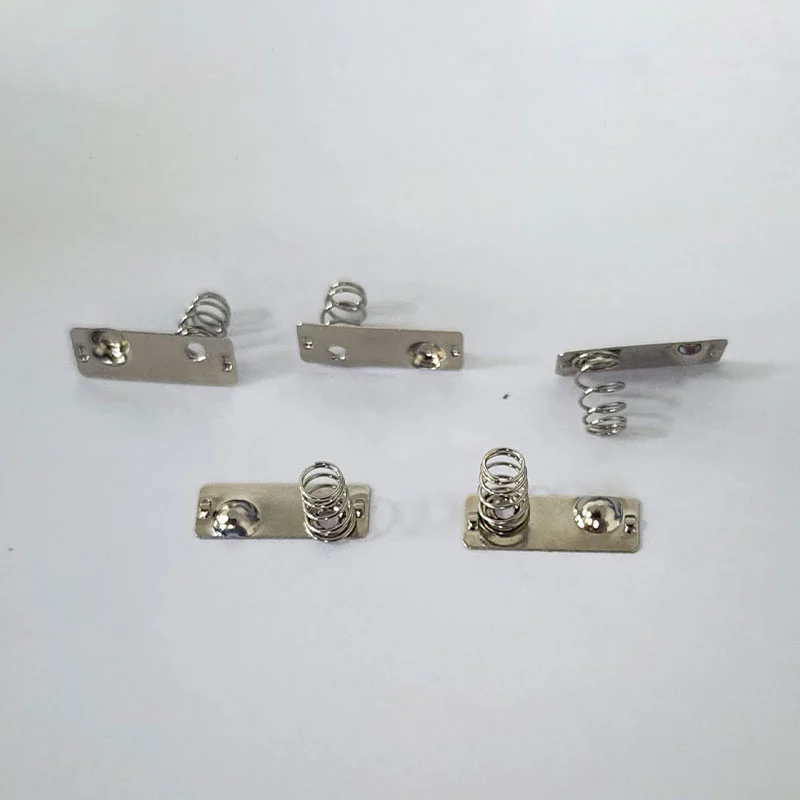
Terminals are precision metal components designed to establish electrical connections between wires, or between wires and electronic components. They are joined to wires via crimping or welding and then inserted into corresponding connector housings to ensure reliable electrical and mechanical connections.
● Automotive Wiring Harness Terminals: Used in vehicle wiring harness systems including engine compartment, chassis, body, and power battery high-voltage harnesses—requiring performance under harsh conditions such as a wide temperature range (-40°C to +125°C), strong vibration, and chemical corrosion resistance.
● New Energy "Three-Electric" Terminals: Specifically designed for high-voltage, high-current applications involving battery packs, electric drive units (motors), and electronic control units (inverters); requirements include low contact resistance, high current-carrying capacity, and excellent vibration resistance.
● Industrial Control Equipment Terminals: Used in industrial automation equipment, PLC control cabinets, servo drives, etc., emphasizing high mating cycles and stable signal transmission.
● Communication Equipment Terminals: Used in 5G base stations, optical modules, servers, etc., requiring low signal loss and low crosstalk during high-frequency transmission.
● Consumer Electronics Terminals: Used in mobile phones, laptops, wearable devices, etc., emphasizing miniaturization and high-density integration.
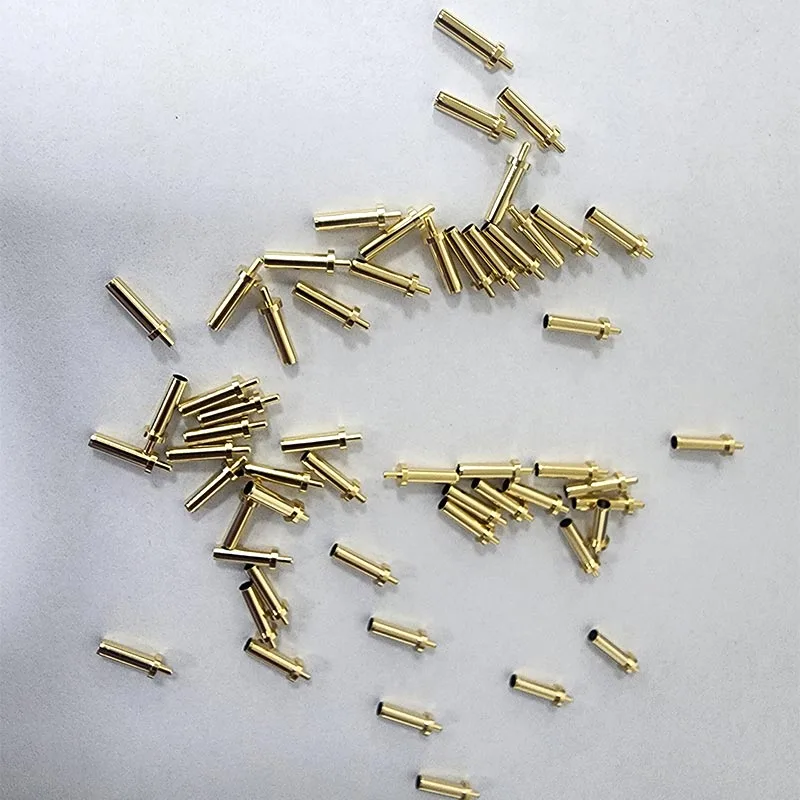
● Pin Terminal
● Socket Terminal
● Blade Terminal
● Ring Terminal
● Fork Terminal
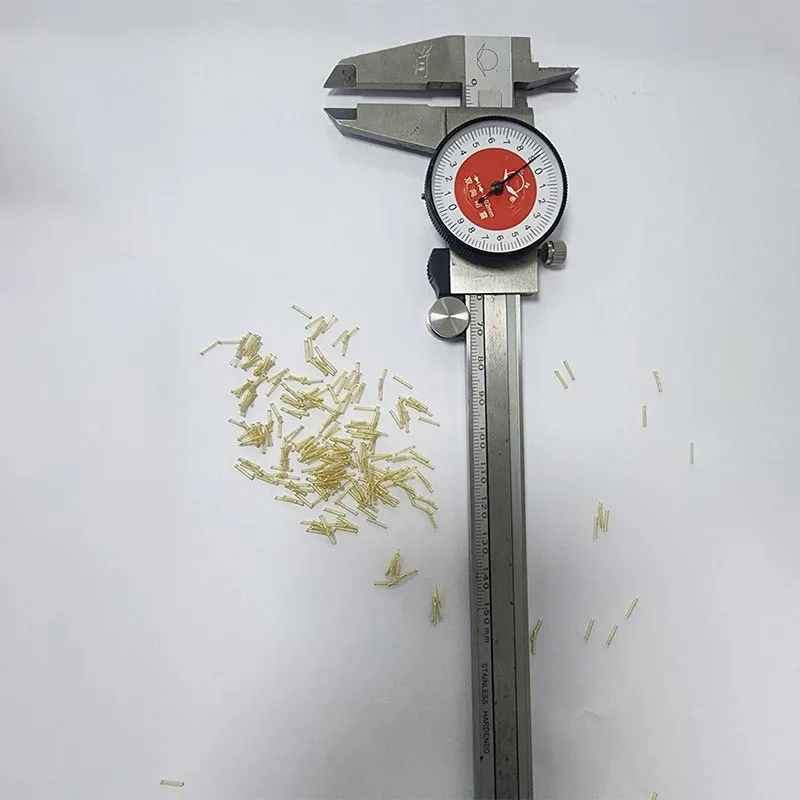
● Tube Terminal
● Crimp Terminal
| Material Solution | Material Grade | Core Advantages | Typical Applications |
| Phosphor Bronze | C5191 / C5210 | Good elasticity, moderate electrical conductivity, cost-effective | Signal terminals, low-voltage wire harness terminals |
| Brass | C3604 / C2680 | Excellent machinability, low cost | General low-voltage terminals, consumer electronics terminals |
| Pure Copper | C1100 / TU1 | Highest electrical conductivity (≥99.9% IACS) | High-current terminals, new-energy high-voltage terminals |
| Tellurium Copper | C14500 | High conductivity & free-cutting property, balancing conductivity and processing efficiency | High-precision turned terminals |
| Beryllium Copper | C17200 | Outstanding elasticity, extremely long fatigue service life | High-reliability mating terminals, connector spring-contact terminals |
● Tin Plating: Most cost-effective; suitable for standard low-voltage applications; offers good solderability.
● Nickel Plating: High corrosion resistance; suitable for harsh environments.
● Silver Plating: Ultra-low contact resistance; suitable for high-voltage, high-current applications in new energy vehicles.
● Gold Plating (Flash Gold / Hard Gold): Oxidation-resistant with extremely low and stable contact resistance; suitable for high-reliability signal transmission.
● Precision High-Speed Stamping: Utilizes high-precision progressive dies for continuous stamping with accuracy up to ±0.02mm, ensuring structural consistency and batch stability.
● CNC Precision Turning: Employs CNC Swiss-type or turret lathes for irregular and high-precision terminals to meet specific design requirements.
● Automated Crimp: Equipped with fully automated crimping machines featuring force-monitoring curves to ensure quantifiable and traceable crimp quality for every terminal.
● Automated Plating: Supports both continuous (reel-to-reel) and rack plating, with controllable and uniform coating thickness.
● Current-Carrying Capacity: Ranges from 0.5A to over 300A (depending on specifications and materials), covering applications from signal transmission to high-voltage, high-current systems.
● Contact Resistance: ≤20mΩ (can reach ≤5mΩ with silver or gold plating).
● Mating/Unmating Force: Customized based on connector design to ensure smooth insertion and reliable locking.
● Operating Temperature Range: -40°C to +125°C (standard automotive); high-temperature models available up to +150°C.
● Vibration Resistance: Meets automotive vibration standards such as LV 112 and USCAR.
● Crimp Pull-out Force: Meets USCAR-21 requirements based on wire gauge and terminal specifications.
● Stamping Precision: ±0.02mm.
● Plating Thickness Control: Precision of ±0.5μm.
● Product Compliance: Complies with RoHS 2.0 and REACH environmental regulations.
We hold dual ISO 9001 and IATF 16949 certifications and possess the comprehensive quality management capabilities required to serve global Tier 1 suppliers and OEMs. We firmly believe that for precision hardware components like EV terminals, quality is not merely inspected into the product—it is built in through design and manufacturing.
• APQP (Advanced Product Quality Planning): Involvement begins at the early stages of terminal project development; we collaborate with customers on design reviews, process development, and validation planning to ensure reliability requirements for automotive applications are met from the design source.
• PPAP (Production Part Approval Process): Supports full-level PPAP documentation submission, covering design records, process flow diagrams, DFMEA/PFMEA, control plans, MSA reports, dimensional reports, material certificates, initial process capability studies, etc.
• FMEA (Failure Mode and Effects Analysis): Systematic implementation of DFMEA and PFMEA during product development; proactive prevention—at both design and process levels—addresses common failure modes such as increased contact resistance, degradation of mating/unmating forces, and loosening due to vibration.
• SPC (Statistical Process Control): Implemented for key processes (stamping, plating, crimping) to ensure Cpk ≥ 1.33; equipment automatically stops and triggers an alarm if crimping force exceeds control limits.
• MSA (Measurement System Analysis): Regularly conducted to ensure the accuracy and reliability of inspection data.
• Optical projectors and CMMs (Coordinate Measuring Machines) – Dimensional accuracy inspection
• Contact resistance testers – Electrical performance testing
• Spring force testers – Mating/unmating force testing
• Hardness testers – Material hardness inspection
• Coating thickness testers – Plating thickness inspection
• Salt spray chambers – Corrosion resistance testing
• Micro-section analysis equipment – Crimping quality cross-section analysis (porosity < 10%)
• Fully automatic sorting machines – 100% inspection of finished products prior to shipment
Comprehensive production and inspection records are established for every batch of electric vehicle terminals, ensuring full traceability from raw material intake to finished product shipment and meeting the automotive industry's strict requirements for supply chain transparency.
We have deep expertise in the precision manufacturing of terminals; our electric vehicle terminals are widely used across sectors such as new energy vehicles, industrial control equipment, and communication devices. In the domestic new energy vehicle market, we have established long-term, stable partnerships with multiple mainstream automakers, and our products are utilized in the mass-produced models of leading new energy vehicle brands. We deeply understand the requirements automakers place on terminal suppliers: beyond superior product quality, they demand rapid technical responsiveness and reliable delivery assurance.
We offer end-to-end customized services, spanning from design review to mass production delivery:
● Design Support: Customers provide drawings or functional specifications (e.g., current-carrying capacity, contact resistance, mating force, temperature rating). Our engineering team completes a DFM (Design for Manufacturability) assessment within 48 hours, covering terminal structural optimization, material selection, plating recommendations, and crimping process analysis.
● Rapid Prototyping: Lead times are 3–5 working days for simple designs and 5–7 working days for complex ones; small-batch validation is supported.
● Mass Production Delivery: Options include reel-and-tape (compatible with automated crimping lines), bulk, and tube packaging to suit various customer assembly methods.
● Delivery Models: We support VMI (Vendor Managed Inventory) and JIT (Just-In-Time) delivery to align with customer lean manufacturing requirements.
● Minimum Order Quantity (MOQ): Flexible terms available, supporting everything from prototype validation to high-volume mass production.
A1: EV terminals are specifically designed for automotive applications with requirements far exceeding industrial standards. Key differences include: wider operating temperature range (-40°C to +125°C vs. industrial -25°C to +85°C), stricter vibration resistance (meeting LV 112 / USCAR standards), higher current-carrying capacity (up to 300A+ for high-voltage systems), and mandatory IATF 16949 certified production with full PPAP documentation and batch traceability.
A2: We address vibration-induced loosening through three measures: (1) material selection — beryllium copper (C17200) or phosphor bronze (C5191) for sustained elastic contact force; (2) structural design — optimized terminal geometry ensures stable mating force; (3) process control — SPC with Cpk ≥ 1.33 on critical dimensions and force testing per batch. All designs are validated to LV 112 and USCAR vibration standards.
A3: Our high-voltage terminals support current ratings from 0.5A up to over 300A, depending on material selection (pure copper C1100 for maximum conductivity), cross-sectional area, and plating type (silver plating recommended for high-current applications). We provide specific ampacity recommendations based on your wire gauge and operating temperature requirements.
A4: We use fully automated crimping machines with real-time force-monitoring curves. Each crimp is recorded with force profile data; if the crimping force exceeds control limits, the machine automatically stops and triggers an alarm. We also perform micro-section analysis on every batch (porosity < 10%) and verify pull-out force per USCAR-21 requirements to ensure crimp integrity.
A5: We offer tin, nickel, silver, and gold plating. Selection guide: tin plating — cost-effective for standard low-voltage applications; nickel plating — high corrosion resistance for harsh environments; silver plating — ultra-low contact resistance (≤5mΩ) for high-voltage/high-current new energy applications; gold plating — oxidation-resistant with stable contact resistance for high-reliability signal transmission. All plating thickness is controlled to ±0.5μm precision.
A6: Yes. We hold IATF 16949 certification and support full PPAP Level 3 submission, including design records, process flow charts, DFMEA/PFMEA, control plans, MSA studies, dimensional reports, material certificates, initial process capability studies (Cpk ≥ 1.33), and appearance approval reports. We have extensive experience submitting PPAP packages to domestic new energy vehicle manufacturers.
Address
Fumin Science and Technology Park, Songgang Subdistrict, Bao'an District, Shenzhen City, Guangdong Province, China
Tel