E-mail
WhatsApp



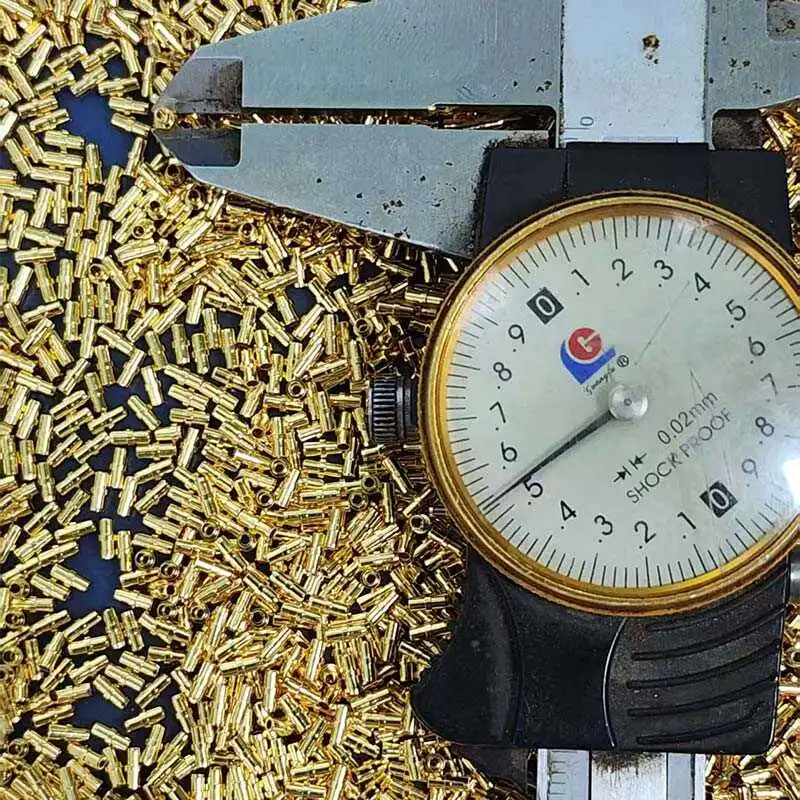
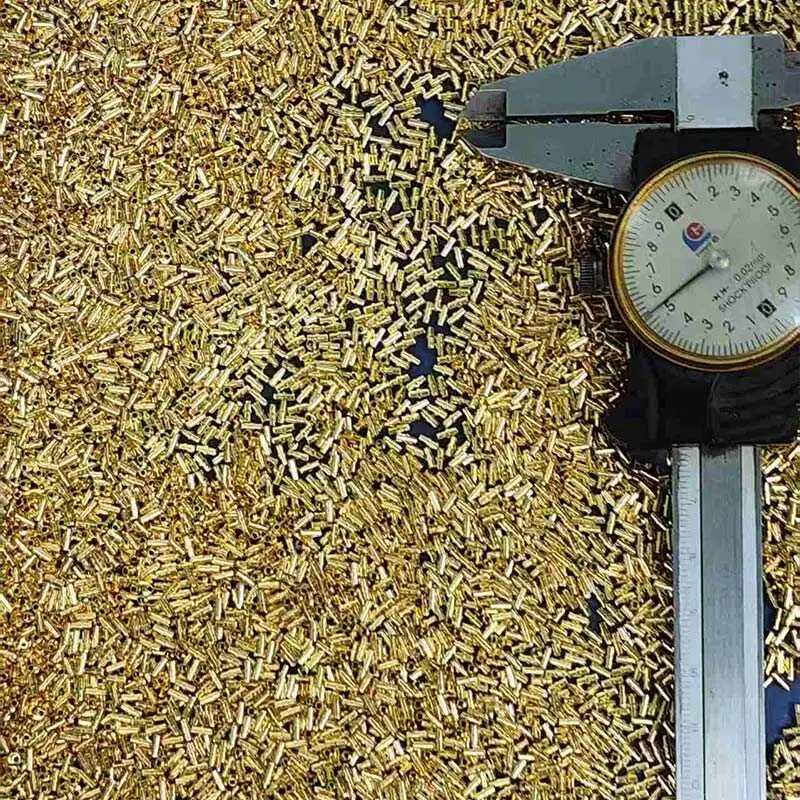
In the design of precision electronic products, spring pins often need to be mounted on metal casings, aluminum alloy panels, plastic housings, or structural parts materials that do not support direct PCB-style soldering.
Alternatively, products may require frequent disassembly for maintenance, making permanent soldered connections impractical; or, the mating interface may be subject to significant assembly tolerances and vibration or shock, conditions under which simple press-fit mounting would fail.
Threaded Pogo Pins address these "non-PCB" connectivity requirements. By screwing the precision-threaded barrel directly into a threaded hole in the housing, panel, or structural component, they achieve both secure mechanical fixation and reliable electrical connection.


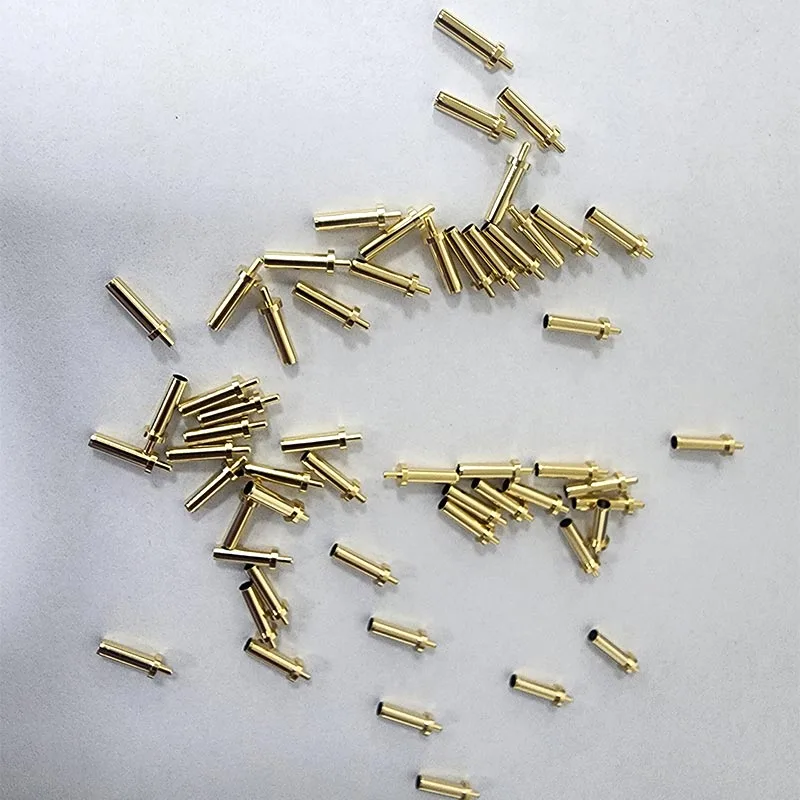
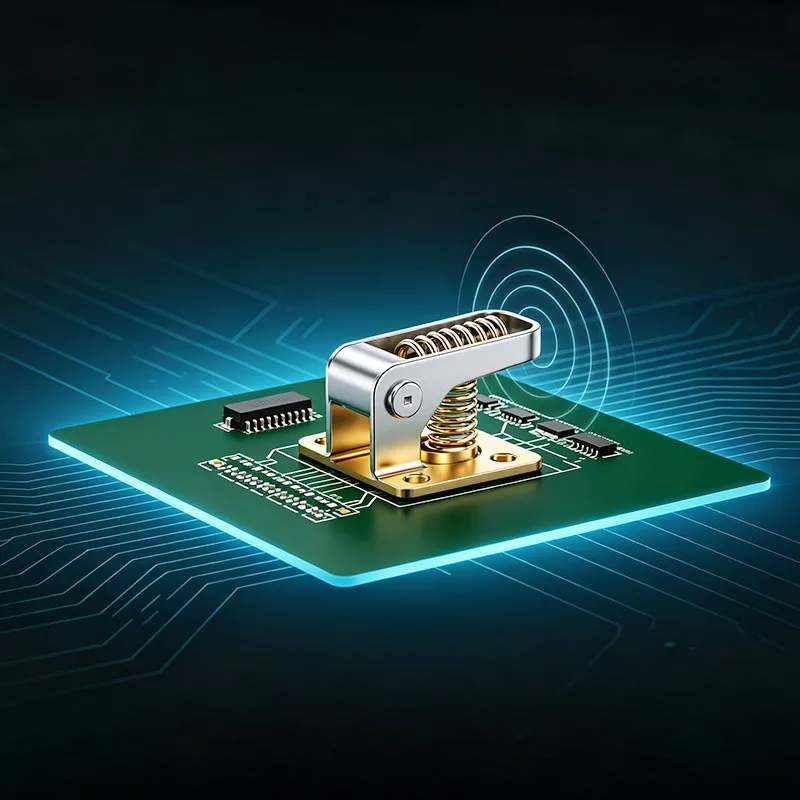
A Threaded Pogo Pin is a spring-loaded, conductive interconnect component featuring precision external threads at the rear of the barrel. It is installed by screwing it into a threaded hole in a device housing, panel, or structural component. An internal spring drives the movement of the plunger, establishing stable, spring-loaded contact with the mating terminal.
The core structure consists of four parts:
● Plunger (Pin Head): The contact element at the front end; it comes in various tip shapes (flat, pointed, claw, rounded, etc.) and features a gold-plated surface to ensure low contact resistance.
● Spring: Located inside the barrel, it provides continuous axial force to the plunger, ensuring stable contact under various vibration and tolerance conditions.
● Body (Tube): A hollow cylinder housing the plunger and spring; the outer wall features precision threading, serving as both a current conduction path and a mechanical mounting structure.
● Thread Section: Precision external threads at the rear of the barrel, used to screw the pin into a mounting hole, creating a secure connection between the spring pin and the structural component.
The spring pin is screwed into a pre-threaded hole in the device housing or panel via its rear threads; once tightened, the barrel forms a secure mechanical connection with the mounting substrate. Driven by spring force, the plunger extends outward to maintain elastic contact with the mating contact pad or conductive surface.
The current path is: Mating contact → Plunger → Spring → Barrel → Thread section → Mounting substrate (or via a wire connected to the barrel sidewall). The threaded connection ensures the pin does not loosen or detach in harsh environments involving vibration or shock, while also facilitating repeated disassembly and maintenance.
| Comparison Dimension | SMT Surface-mount Type | DIP Through-hole Type | Press-fit Type | Threaded Fastening Type |
| Installation Method | Reflow soldering | Wave soldering | Press-fit into interference hole | Thread-in screwing |
| Mounting Substrate | PCB board | PCB board | PCB board / metal parts | Metal housing / panel / structural components |
| Removability | Non-removable | Non-removable | Removable but hole prone to damage | Repeatedly detachable |
| Vibration Resistance | Average | Average | Medium | Excellent |
| Installation Tool | SMT pick-and-place machine | Insertion machine | Press-fit machine | Screwdriver / wrench |
| Application Scenarios | PCB surface connection | PCB through-hole connection | PCB or thin-plate connection | Housing / panel / thick-wall structural component connection |
The core value of threaded spring pins lies in their versatility and reliability: when the mounting substrate is not a PCB but rather a non-solderable material such as a metal housing, aluminum alloy panel, or plastic structural component threaded mounting offers the most reliable and flexible connection solution.
● M2 threads: Suitable for compact spaces such as small equipment housings and wearable device casings
● M2.5 threads: Suitable for mid-sized consumer electronics and smart wearable devices
● M3 threads: One of the most common specifications; suitable for the majority of consumer electronics
● M4 threads: Suitable for medium-to-large equipment and industrial control panels
● M5/M6/M8 threads: Suitable for heavy-duty applications involving high currents, large-scale equipment, industrial sensors, etc.
● Non-standard threads: Customization available for customer-specified parameters such as thread pitch and thread profile
● Fully threaded: Threads machined along the entire length of the barrel; offers maximum retention force; suitable for thick-walled structural components
● Partially threaded: Threads machined only on the rear section of the barrel, with a smooth cylindrical front section; balances retention and guiding functions
● Flanged threaded: Features a flange shoulder in the middle section; the flange face sits flush against the mounting surface after screwing in, providing axial positioning and sealing
● Signal type: Used for signal transmission; emphasizes low contact resistance and high-frequency performance
● High-current type: Used for power transmission; emphasizes low impedance and high current-carrying capacity; some models support currents exceeding 35A
● Grounding type: Designed specifically for equipment grounding connections; the threaded section establishes a reliable grounding path with the housing
● Antenna type: Used for resilient grounding in wireless communication equipment such as 5G antennas and RF modules Signal Connection
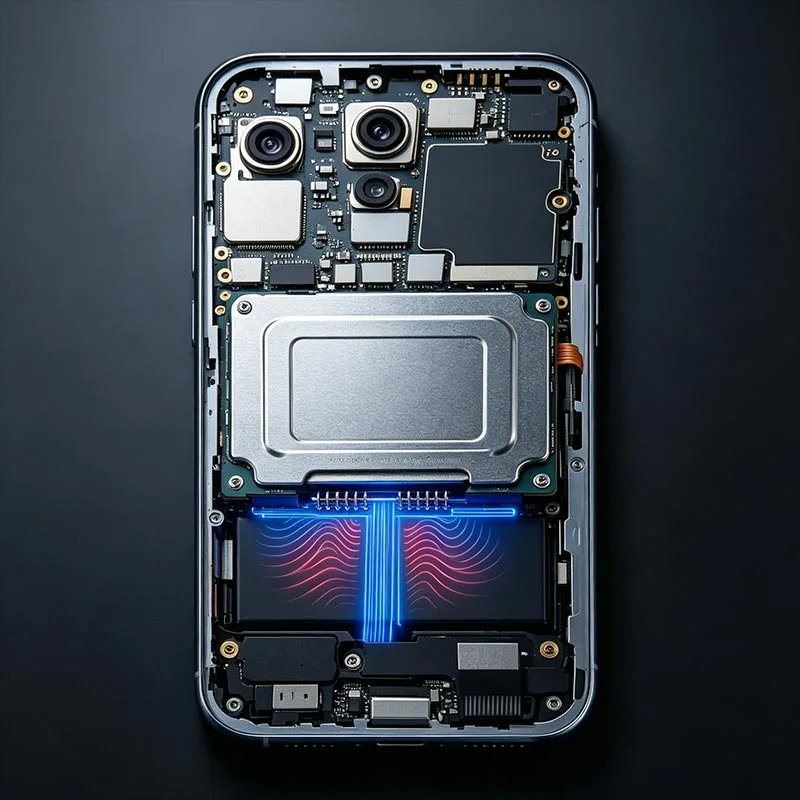
● Consumer Electronics Housing: Resilient connection between the metal casing of smartwatches/fitness trackers and the internal PCB threaded mounting ensures stability against loosening during drops and vibration.
● E-cigarettes: Threaded connection between the atomizer core and the battery unit threaded spring-loaded pins naturally suit the screw-in assembly structure of e-cigarettes; select models support high currents up to 35A.
● Automotive Electronics: Housing connections for EV charging guns, smart cockpit modules, and vehicle sensors threaded mounting offers vibration resistance that meets the rigorous demands of automotive environments.
● Industrial Equipment: Panel connections for industrial tablets, PLC control cabinets, and 3D printers threaded mounting facilitates on-site maintenance and module replacement.
● Communication Equipment: RF grounding connections for 5G antennas, two-way radios, and signal base stations threaded mounting ensures reliable grounding between the antenna and the device housing.
● Medical Equipment: Modular connections for electric wheelchairs and medical monitoring devices threaded mounting allows for easy disassembly, maintenance, cleaning, and sterilization.
● LED Lighting: Lamp head connections for track lights and display cabinet lighting threaded mounting naturally aligns with the screw-in installation design of these fixtures.
● Test Fixtures: Threaded mounting probes for ICT/FCT test fixtures—enables rapid probe replacement and maintenance.
| Component | Common Materials | Process Features |
| Pin Tip | Brass C3604, Beryllium Copper (BeCu), Phosphor Bronze | Precision turning with gold-plated surface to ensure low contact resistance and wear resistance |
| Barrel | Brass C3604, Phosphor Bronze Alloy, Stainless Steel | Precision turning plus knurling / thread rolling for guaranteed thread accuracy |
| Spring | Piano Wire (SWP), Stainless Steel Wire (SUS) | Special heat treatment to maintain long-lasting stable elasticity |
| Thread Section | Integrally formed with barrel | Knurling and tapping process, thread accuracy up to 6g/6H grade |
● Gold Plating (Flash Gold / Hard Gold): Most common solution; offers oxidation resistance and extremely low, stable contact resistance.
Nickel + Gold Plating: Enhances corrosion resistance; suitable for harsh environments.
Nickel Plating: Suitable for grounding-type pogo pins where contact resistance requirements are less stringent.
Tin Plating: Cost-optimized solution; suitable for low-frequency signals or high-current applications.
Precision CNC Turning: Plungers and barrels are machined using high-precision CNC lathes to ensure a precise fit of internal structures.
Thread Rolling: Threaded sections of the barrel are produced via thread rolling, resulting in a smooth surface finish and high mating precision.
Tapping: Internal threads on certain models are created via tapping to meet specific structural requirements.
Deep Drawing: Barrels are formed using deep drawing, ensuring uniform wall thickness and consistent inner diameters.
Precision Crimping/Assembly: Plungers, springs, and barrels are assembled using precision crimping to ensure assembly consistency.
Vacuum Plating: Ensures uniform coating coverage on both the barrel interior and threaded surfaces.
Thread Specifications: M2, M2.5, M3, M4, M5, M6, M8 (custom non-standard threads available)
Outer Diameter Range: 1.0mm – 10.0mm
Total Length Range: 3.0mm – 50.0mm
Travel Range: 0.3mm – 5.0mm
Contact Resistance: ≤30mΩ (≤10mΩ achievable with gold plating)
Rated Current: 0.5A – 35A (depending on specifications and materials)
Rated Voltage: Up to 36V (depending on insulation design)
Mechanical Life: ≥2,000 cycles (standard models); >100,000 cycles (high-quality models)
Operating Temperature Range: -40°C to +125°C
Dimensional Precision: Thread precision Class 6g/6H; outer diameter precision ±0.02mm
Spring Force Range: 50g – 500g (customizable)
● Salt spray resistance: 24 hours – 500+ hours (depending on the plating scheme)
● Compliance: Meets RoHS 2.0 and REACH environmental standards
- The factory holds dual certifications for ISO9001 (general quality management) and IATF16949 (automotive industry quality management), demonstrating the standardized quality management capabilities required to serve major global Tier 1 suppliers and OEMs.
- We strictly implement the automotive industry's five core quality tools and maintain standardized control across all processes; unlike typical small-scale workshops, we ensure the stability and reliability of mass-produced products at the system level.
- APQP (Advanced Product Quality Planning): Early project involvement in design reviews, process development, and validation planning to align with customer reliability requirements from the source.
- PPAP (Production Part Approval Process): Provision of a complete set of formal PPAP documentation—including drawings, flow charts, FMEA, control plans, dimensional reports, material certificates, process capability reports, etc.—to meet the audit standards of major clients.
- FMEA (Failure Mode and Effects Analysis): Proactive design and process measures to mitigate common issues such as spring force degradation, abnormal resistance, thread stripping, loose fits, and pin jamming, thereby reducing the risk of defects in mass production.
- SPC (Statistical Process Control): Continuous data monitoring across core processes—including turning, thread rolling, riveting/pressing, and plating—with a Cpk ≥ 1.33 for critical processes, ensuring consistency in dimensions and performance across batches.
- MSA (Measurement System Analysis): Regular calibration of testing equipment ensures accurate and reliable data, eliminating quality misjudgments caused by measurement errors.
- Dimensional Accuracy Inspection: Equipped with optical projectors, CMMs (Coordinate Measuring Machines), and thread go/no-go gauges to strictly control thread accuracy and overall dimensional tolerances.
- Electrical and Mechanical Testing: Equipped with contact resistance testers, spring force testers, and hardness testers to ensure product conductivity, spring force parameters, and material hardness meet specifications.
- Environmental and Durability Testing: Equipped with X-ray coating thickness gauges, salt spray chambers, durability testers, and torque testers to perform comprehensive testing on coating thickness, corrosion resistance, compression lifespan, and thread assembly/disassembly torque.
- Complete records—covering raw material intake, production processing, and finished product inspection—are maintained for every batch of threaded pogo pins, enabling end-to-end traceability from raw material to shipment.
- Meets rigorous industry standards for supply chain transparency, quality accountability, and batch control in the automotive, industrial control, and high-end electronics sectors.
- Rapid DFM Review: Upon receipt of customer drawings or specifications, professional assessments—including structural optimization, spring force design, thread selection, and plating solutions—are completed within 48 hours.
- Efficient Prototyping: Samples are delivered within 3–5 working days for standard structures and 5–7 working days for complex or irregular designs, facilitating rapid prototype testing and solution validation.
- Full-Spec Customization: Parameters such as thread specifications, outer diameter, total length, travel, spring force, current-carrying capacity, and probe tip styles can be customized to meet specific needs.
- Supports various packaging formats—including bulk, tube, and tape-and-reel—perfectly suited for both manual assembly and automated SMT production lines.
- Offers VMI (Vendor Managed Inventory) and JIT (Just-In-Time) delivery services to help customers reduce inventory pressure and align with lean manufacturing models.
- Flexible order requirements with no rigid MOQ (Minimum Order Quantity) limits, supporting customers across all stages—from R&D sampling and small-batch validation to full-scale mass production.
A1: Threaded Pogo Pins are specifically designed for non-PCB mounting substrates — including metal housings, aluminum alloy panels, plastic structural components, and equipment casings that do not support soldering. Unlike SMT, DIP, or press-fit types which require PCBs or thin plates, threaded pins screw directly into threaded holes in thick-wall structural components, providing both mechanical fixation and electrical connection.
A2: We support standard metric threads from M2 to M8, including M2, M2.5, M3, M4, M5, M6, and M8. M2 is suitable for compact devices like wearables; M3 is the most common specification for general consumer electronics; M5–M8 are for heavy-duty high-current applications. Non-standard threads (custom pitch and profile) are also available upon request.
A3: Fully threaded barrels have threads machined along the entire barrel length, providing maximum retention force — ideal for thick-walled structural components. Partially threaded barrels have threads only on the rear section with a smooth cylindrical front section — balancing retention force with smooth plunger travel and easier insertion during assembly. Selection depends on your wall thickness and assembly requirements.
A4: Yes. Threaded mounting is inherently designed for repeated disassembly. Standard models support ≥2,000 mating cycles for assembly/disassembly. For applications requiring frequent maintenance or module replacement, we offer high-durability models with enhanced thread plating and hardened materials to extend cycle life while maintaining consistent thread fit and electrical performance.
A5: Standard signal-type models support 0.5A–3A. High-current models are available up to 35A, depending on pin diameter, material selection (beryllium copper recommended for high conductivity), and plating type (silver plating recommended for high-current applications). Threaded construction inherently supports higher currents than SMT types because the threaded barrel-to-housing connection provides a larger contact area and better heat dissipation.
A6: Choose threaded when: (1) mounting substrate is thick metal/plastic housing (not PCB); (2) frequent disassembly is required for maintenance; (3) application involves strong vibration where press-fit may loosen; (4) torque-controlled installation is preferred. Choose press-fit when: (1) mounting substrate is thin PCB or metal sheet; (2) soldering is not preferred but permanent installation is acceptable; (3) space constraints prevent thread engagement depth. If your substrate supports both, threaded offers superior vibration resistance and reworkability.
Address
Fumin Science and Technology Park, Songgang Subdistrict, Bao'an District, Shenzhen City, Guangdong Province, China
Tel