E-mail
WhatsApp



Traditional PCB connection methods rely on wave soldering or reflow soldering to secure terminals to the board, but these processes have inherent drawbacks: thermal stress can damage high-frequency and heat-sensitive components; cold joints and solder fatigue pose risks to long-term reliability; flux residue requires additional cleaning steps; and rework is difficult and prone to damaging PCB pads.
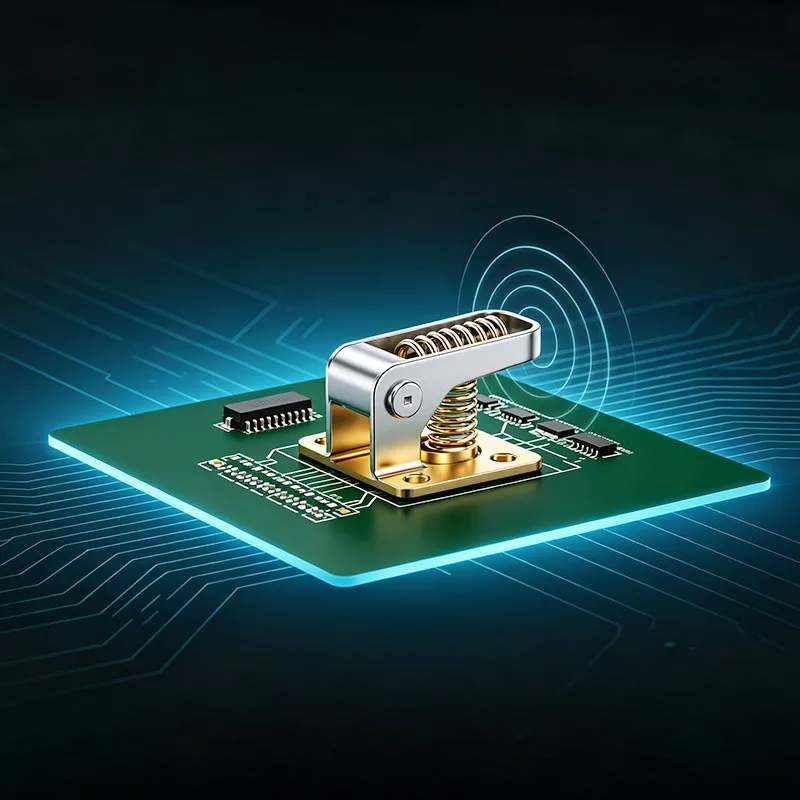
Push-in Spring Loaded Pogo Pins solve these issues. They are pressed into metallized PCB holes using a precision elastic structure, creating stable mechanical and electrical connections through the radial gripping force of an interference fit. The entire process is free from solder, high temperatures, and flux, yet it achieves a low-impedance connection that is more reliable than soldering.
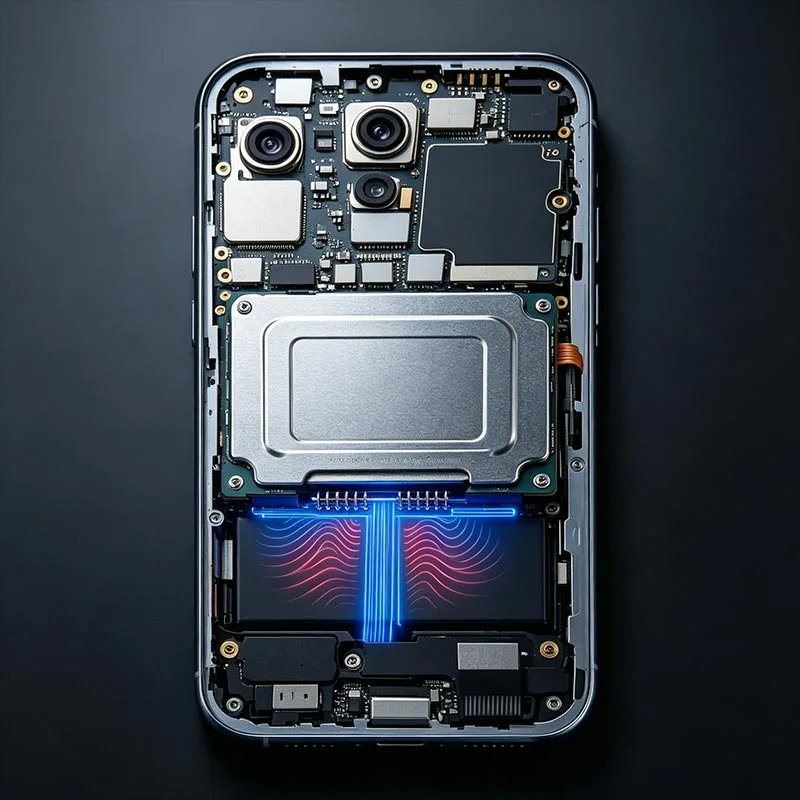
In sectors demanding extremely high reliability such as automotive electronics, 5G communications, and industrial control equipment press-fit spring pins are rapidly replacing traditional soldered terminals.


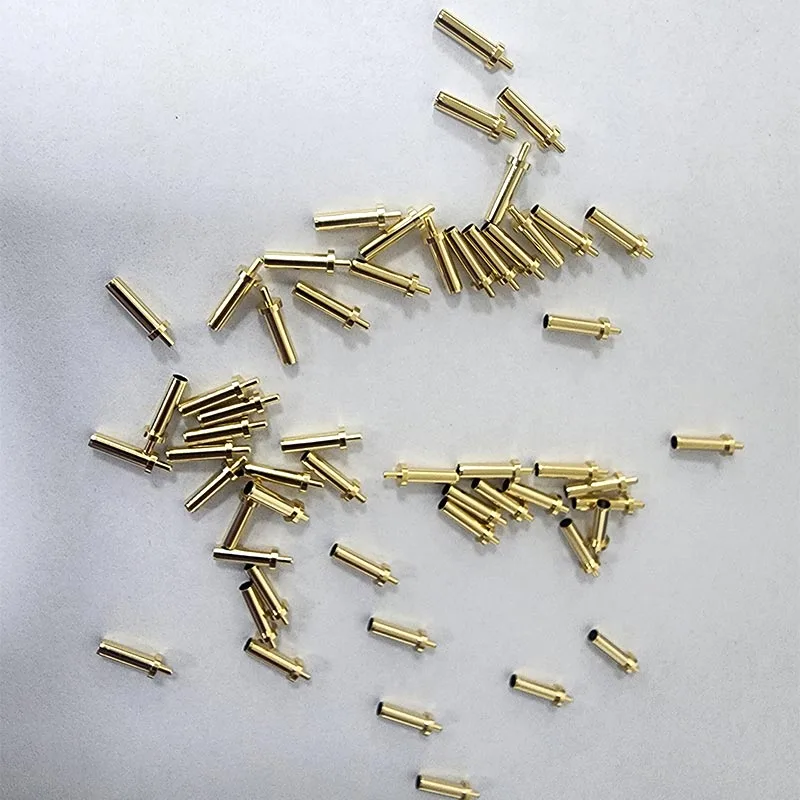
The Push-in Spring Loaded Pogo Pin is a solderless, press-fit conductive terminal. It utilizes a specialized elastic "fisheye" structure in its midsection to form a stable mechanical and electrical connection when pressed into a metallized PCB hole.
The core structure consists of three parts:
Guiding end (pin tip): Features a chamfered tip design to facilitate insertion into the PCB hole and prevent scratching the hole wall during the press-fit process.
Fisheye section (elastic zone): The core structure, featuring symmetrical elastic arms on both sides that form a fisheye-shaped opening (recess) in the center. The elastic arms compress inward during press-fit insertion, maintaining a firm grip on the hole walls through their spring-back force.
Fixed end/pin shank: Connects to the connector body or component.
Interference fit: The maximum outer diameter of the "eye-of-the-needle" section is slightly larger than the PCB hole diameter (interference of approx. 0.03–0.08 mm), ensuring tight contact after insertion.
Elastic deformation: The section compresses during insertion, generating a continuous radial gripping force (approx. 10–50 N) that ensures long-term contact stability.
Cold-press connection: A purely mechanical connection—requiring no solder or high heat—that creates a low-impedance, gas-tight metal-to-metal connection.
| Comparison Dimension | Traditional Soldered Terminals | Press-Fit Spring Pins |
| Thermal Stress | High soldering temperature may damage PCB and thermal-sensitive components | Pure mechanical press-in connection, no thermal stress |
| Reliability | Risks of cold solder joints and solder fatigue | No cold-solder risk, excellent anti-vibration performance |
| Contact Resistance | Resistance increases as solder joints age | Stable contact resistance, no degradation over long-term operation |
| Environmental Performance | Requires flux and post-solder cleaning | Flux-free, no cleaning required, RoHS compliant |
| Repairability | Difficult to rework; risk of pad damage | Removable without damage with dedicated tools, reusable |
| Production Efficiency | Requires soldering process with multiple working steps | Compatible with high-speed press-fit machines for high-volume automation |
● Automotive Electronics: ECU control units, BMS (Battery Management Systems), vehicle controllers, ADAS sensor modules—the vibration resistance and thermal shock tolerance (-40°C to +125°C) of Push-in Spring Loaded Pogo Pins perfectly match the rigorous demands of automotive environments.
● 5G Communication Equipment: Base station high-speed backplanes, RF modules, AAU (Active Antenna Units)—the absence of thermal stress protects the performance of high-frequency components from the impact of soldering.
● Industrial Control Equipment: Servo drives, variable frequency drives (VFDs), industrial power supplies—highly reliable connections ensure stable, long-term equipment operation in harsh industrial environments.
● Military/Aerospace: High-reliability, vibration-resistant equipment—meets military-grade connection reliability standards.
● Test & Measurement: ICT/FCT test fixtures, probe boards—repeatable mating capabilities significantly reduce test fixture maintenance costs.
| Material Solution | Material Grade | Core Advantages | Typical Applications |
| Phosphor Bronze | C5191 / C5210 | Good elasticity, moderate electrical conductivity, cost-effective | General-purpose press-fit spring pins |
| Brass | C3604 / C2680 | Excellent machinability, low cost | Ordinary signal connections |
| Beryllium Copper | C17200 | Outstanding elasticity, extremely long fatigue service life | High-reliability automotive and communication applications |
● Tin Plating: Most cost-effective; suitable for standard signal connections.
● Nickel + Tin Plating: High corrosion resistance; suitable for harsh environments.
● Nickel + Gold Plating: Ultra-low contact resistance and oxidation resistance; suitable for high-reliability signal transmission and high-frequency applications.
● Precision High-Speed Stamping: Uses high-precision progressive dies for continuous stamping, ensuring consistency and batch stability of the "eye-of-the-needle" elastic structure.
● CNC Precision Machining: Uses CNC Swiss-type lathes (sliding headstock or fixed headstock) for complex shapes and special specifications.
● Automated Plating: Supports both continuous (reel-to-reel) and rack plating; plating thickness is uniform and controllable.
● Interference Fit Range: 0.03mm–0.08mm (designed based on matching pin and hole diameters).
● Radial Clamping Force: 10N–50N (customized based on specifications).
● Contact Resistance: ≤30mΩ (can reach ≤5mΩ with gold plating).
● Operating Temperature Range: -40°C ~ +125°C
● Compatible PCB thickness: 1.0mm–3.2mm
● Compatible hole diameter tolerance: ±0.02mm–±0.05mm
● Stamping precision: ±0.02mm
● Pitch specifications: 2.54mm, 3.0mm, 3.96mm, 5.08mm, etc.
● Single-pin current-carrying capacity: 1A–20A+ (depending on dimensions and material)
● Product compliance: Meets RoHS 2.0 and REACH environmental standards
Qiyiguo Technology holds both ISO 9001 and IATF 16949 certifications, possessing comprehensive quality management capabilities to serve global Tier 1 and OEM customers.
● APQP (Advanced Product Quality Planning): Involvement begins at the early stages of spring-loaded pin project development; collaborating with customers on design reviews, process development, and validation plans to ensure reliability requirements for automotive applications are met from the design source.
● PPAP (Production Part Approval Process): Supports full-level PPAP documentation submission, covering design records, process flow diagrams, DFMEA/PFMEA, control plans, MSA reports, dimensional reports, material certificates, initial process capability studies, etc.
● FMEA (Failure Mode and Effects Analysis): Proactively prevents common failure modes associated with press-fit spring-loaded pins—such as insufficient retention force, excessive contact resistance, and hole wall damage—at both the design and process levels.
● SPC (Statistical Process Control): Implemented for key processes (stamping, plating) to ensure a Cpk ≥ 1.33.
● MSA (Measurement System Analysis): Conducted regularly to ensure the accuracy and reliability of inspection data.
● Optical projector and CMM (Coordinate Measuring Machine) – Dimensional accuracy inspection
● Contact resistance tester – Electrical performance testing
● Insertion/extraction force tester – Mechanical performance testing
● Hardness tester – Material hardness testing
● Coating thickness tester – Plating thickness testing
● Salt spray chamber – Corrosion resistance testing
Complete production and inspection records are established for every product batch, ensuring full traceability from raw material intake to finished product shipment, thereby meeting the automotive industry's strict requirements for supply chain transparency.
Qiyiguo Technology offers end-to-end customization services, ranging from design review to mass production delivery:
● Design Support: Customers can provide drawings or functional specifications (e.g., retention force, contact resistance, current-carrying capacity, temperature rating). Our engineering team completes DFM assessments within 48 hours, covering areas such as eye-of-the-needle (EON) structure optimization, interference fit design, material selection, plating recommendations, and PCB hole-size compatibility analysis.
● Rapid Prototyping: Lead times are 3–5 working days for simple structures and 5–7 working days for complex ones; small-batch validation is supported.
● Mass Production & Delivery: Options include tape-and-reel (compatible with automated press-fit lines), bulk, and tube packaging to meet diverse assembly requirements.
● Delivery Models: Support for VMI (Vendor Managed Inventory) and JIT (Just-in-Time) delivery to align with lean manufacturing needs.
● Minimum Order Quantity (MOQ): Flexible terms to facilitate a smooth transition from prototype validation to high-volume mass production.
A1: The "fish-eye" structure is the core elastic zone of a press-fit pogo pin, featuring symmetrical elastic arms that form a central recess. When pressed into a PCB hole, the arms compress inward and generate continuous radial gripping force (10N–50N) through spring-back action. This creates a gas-tight, low-impedance mechanical connection without solder.
A2: The recommended interference fit range is 0.03mm–0.08mm (difference between pin maximum outer diameter and PCB hole diameter). This ensures sufficient radial clamping force for stable electrical contact while preventing excessive stress that could crack the PCB hole wall. Specific values are customized based on hole diameter and PCB material.
A3: Yes. Unlike soldered terminals, press-fit pogo pins are mechanically retained and can be removed using dedicated extraction tools without damaging the PCB pads. However, repeated insertion/extraction may reduce retention force over time. For applications requiring multiple mating cycles, we recommend using spring-loaded pogo pins (Pogo Pin type) instead.
A4: Our press-fit pogo pins accommodate PCB hole diameter tolerances of ±0.02mm to ±0.05mm, depending on the specific pin specification and interference fit design. We recommend controlling hole diameter tolerances within this range to ensure consistent press-fit quality and avoid loose connections or hole wall damage.
A5: No. Push-in pogo pins are designed exclusively for mechanical press-fit assembly. They require no soldering or high-temperature processes. Assembly is performed using automated press-fit machines or manual arbor presses, making them ideal for applications where thermal stress from soldering must be avoided.
A6: The typical single-pin current-carrying capacity ranges from 1A to over 20A+, depending on pin diameter, material selection (phosphor bronze, brass, or beryllium copper), and plating type. For higher current requirements, we recommend beryllium copper (C17200) with gold or silver plating to minimize contact resistance.
Address
Fumin Science and Technology Park, Songgang Subdistrict, Bao'an District, Shenzhen City, Guangdong Province, China
Tel