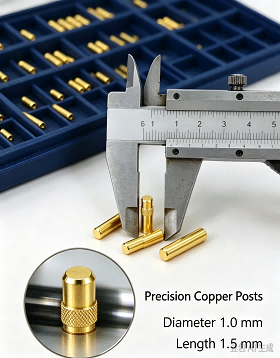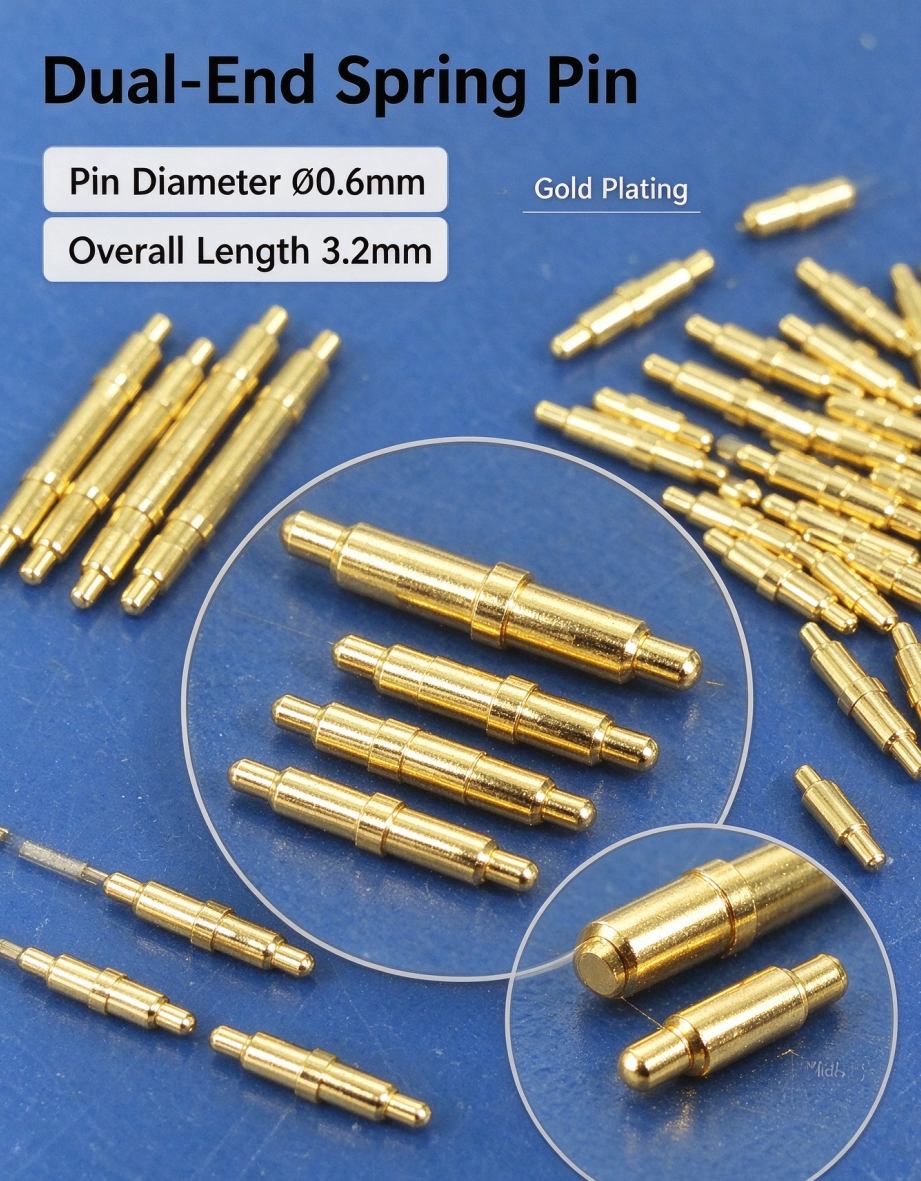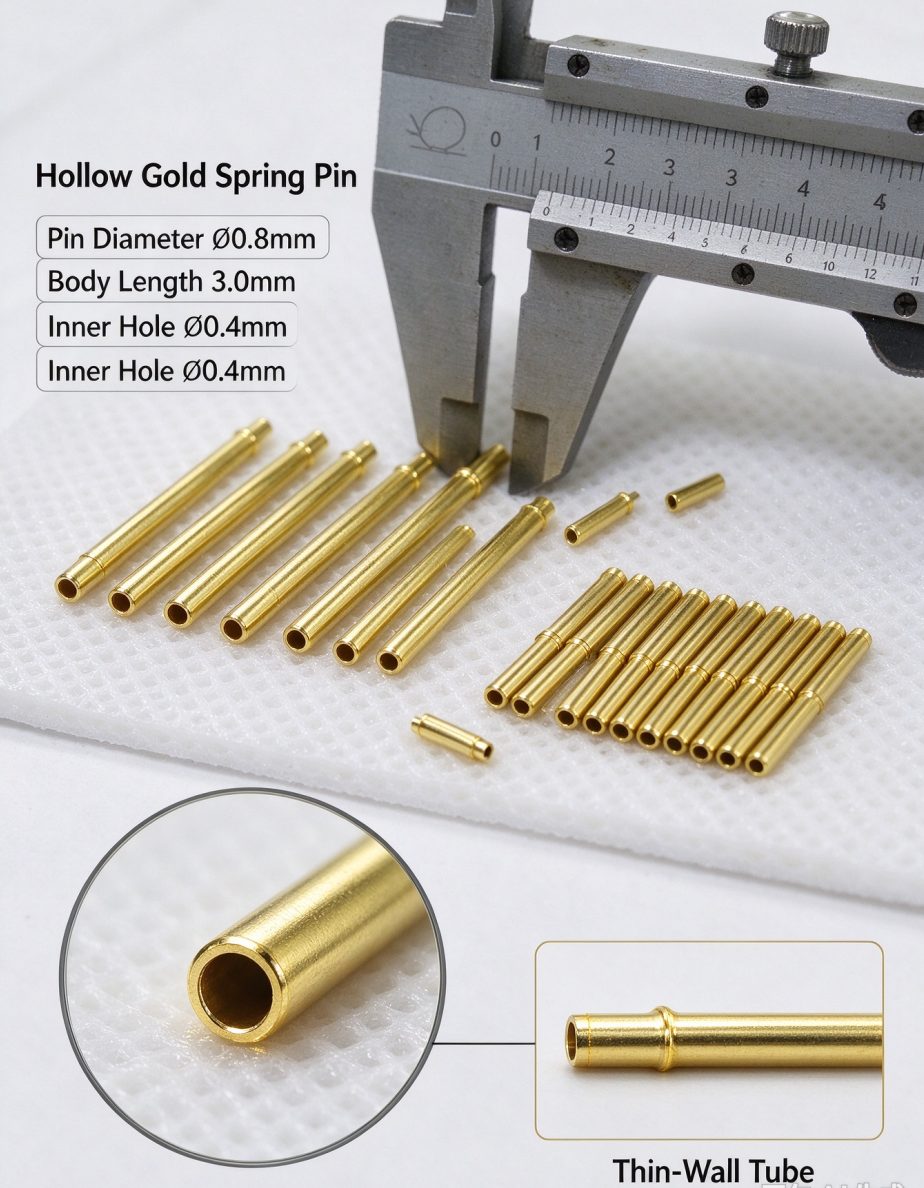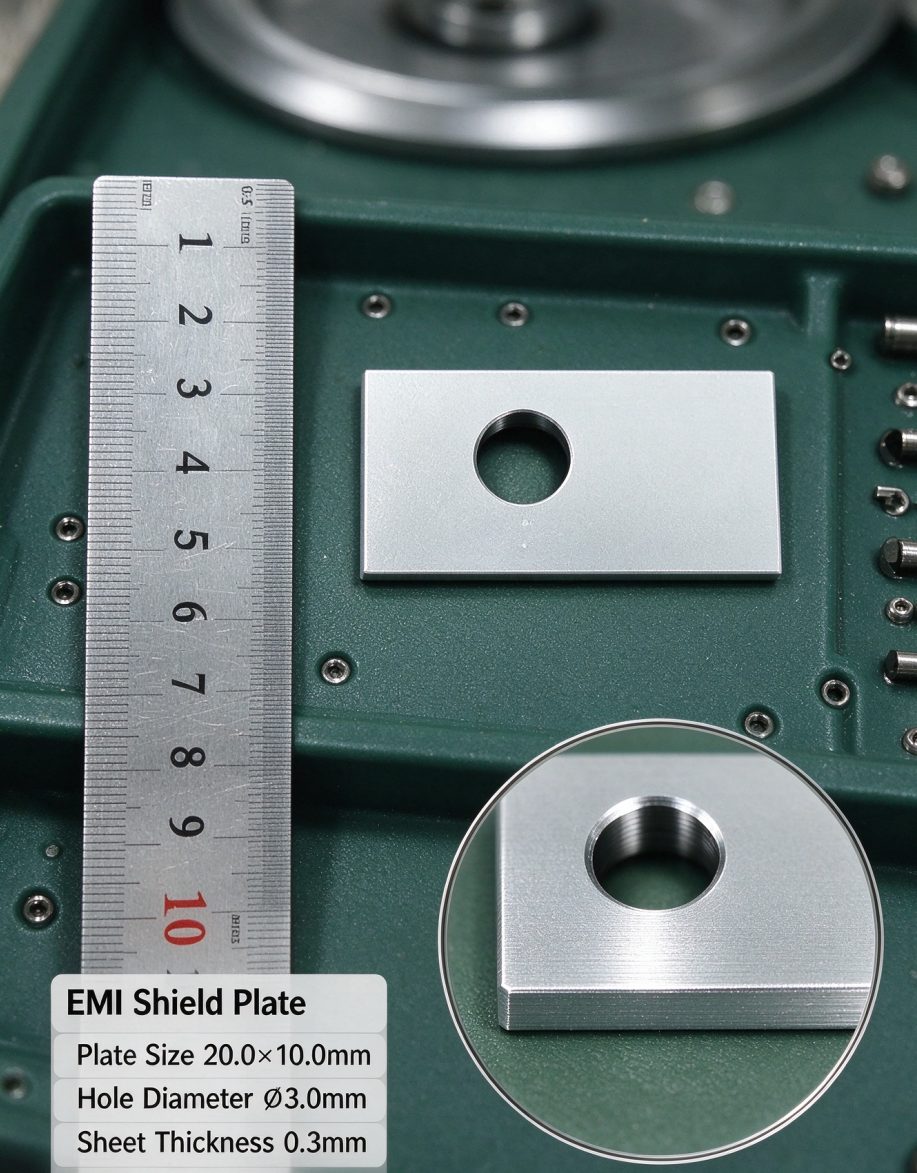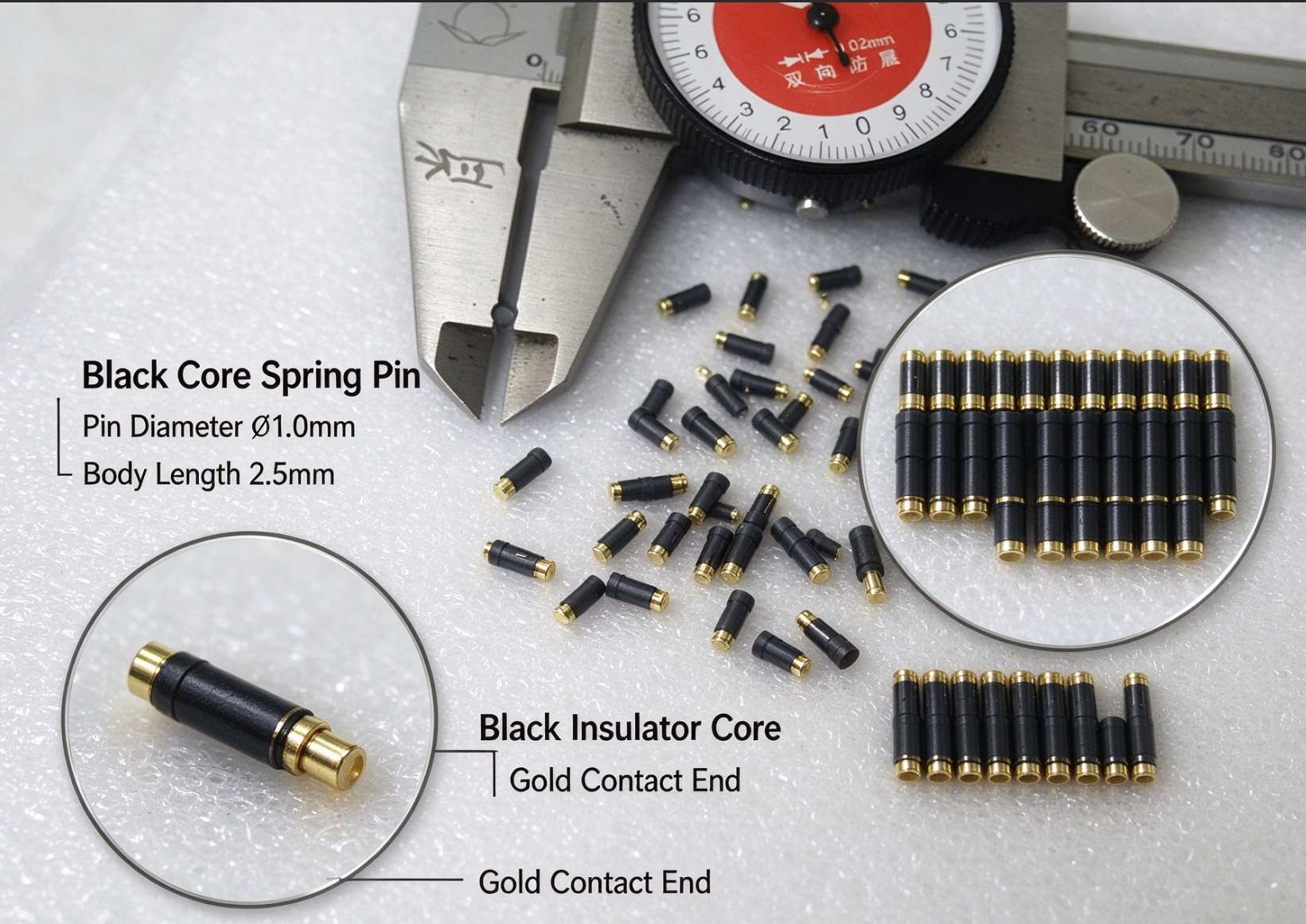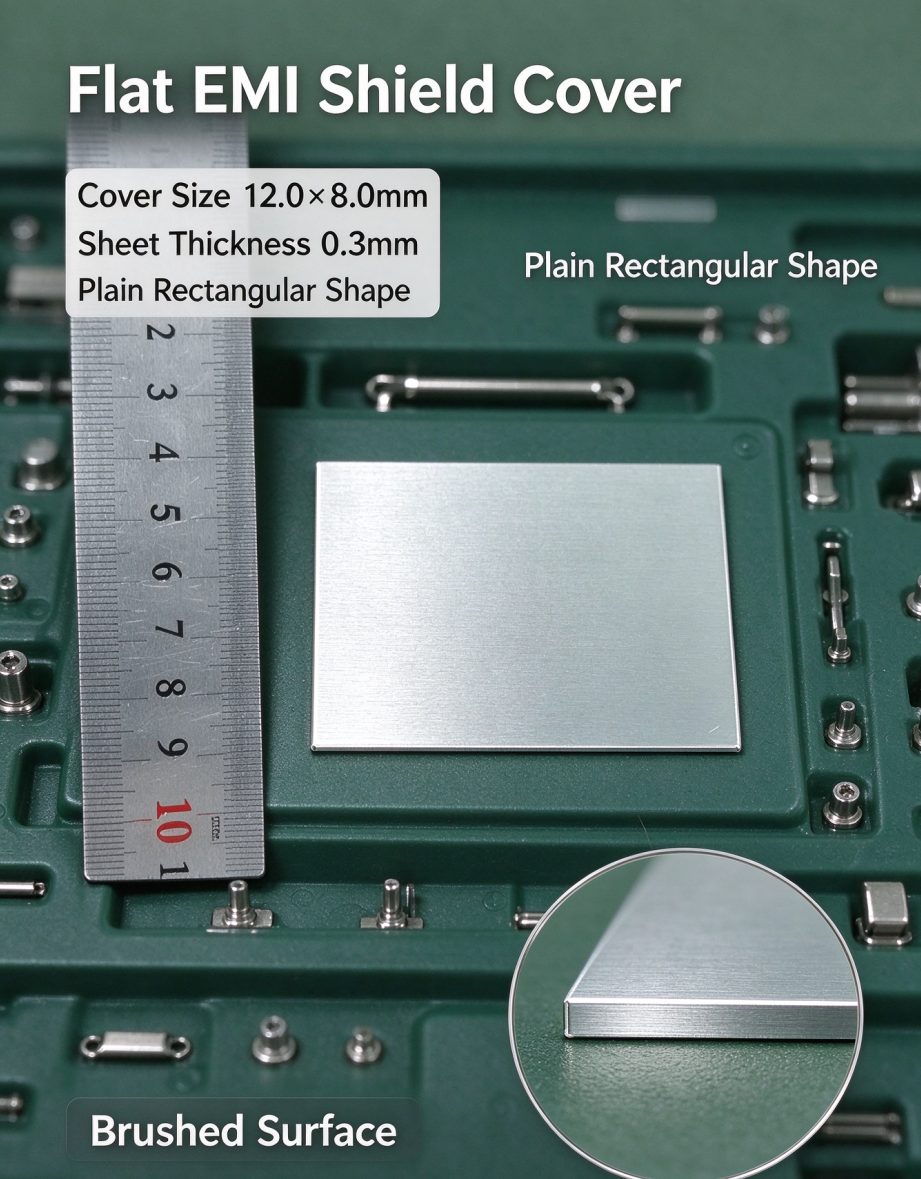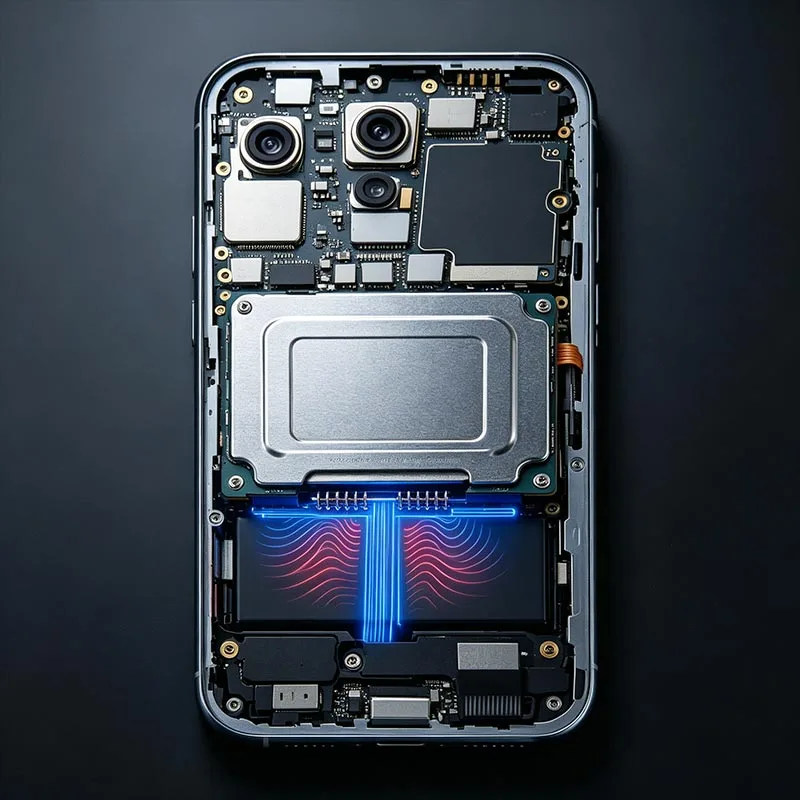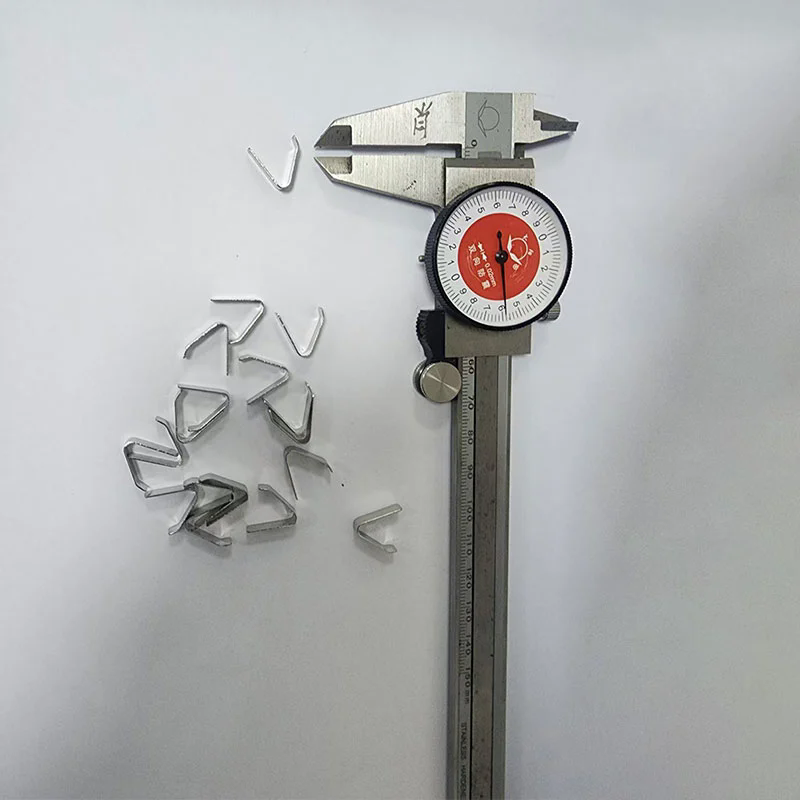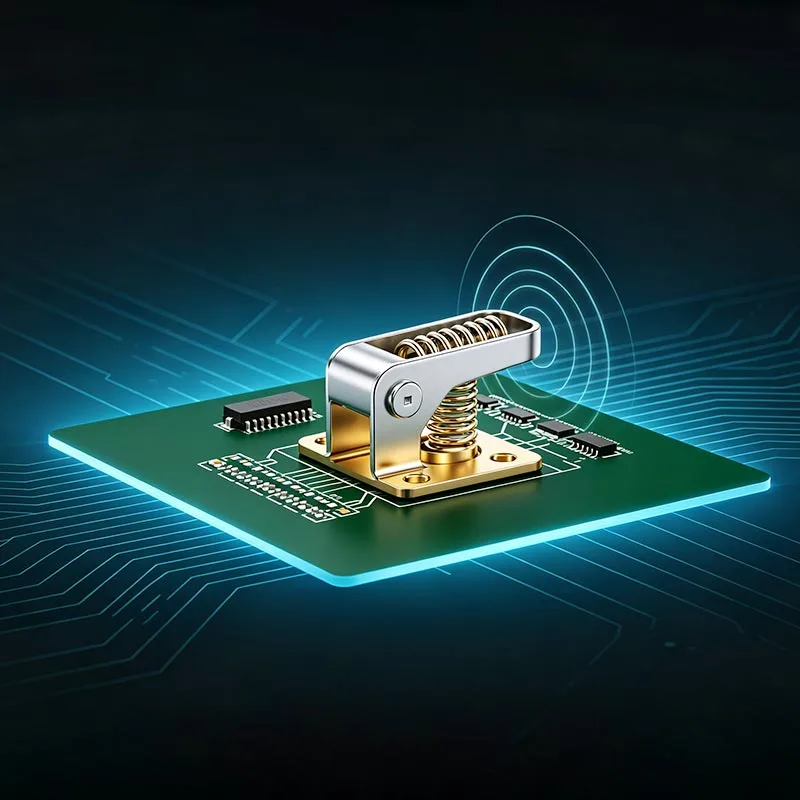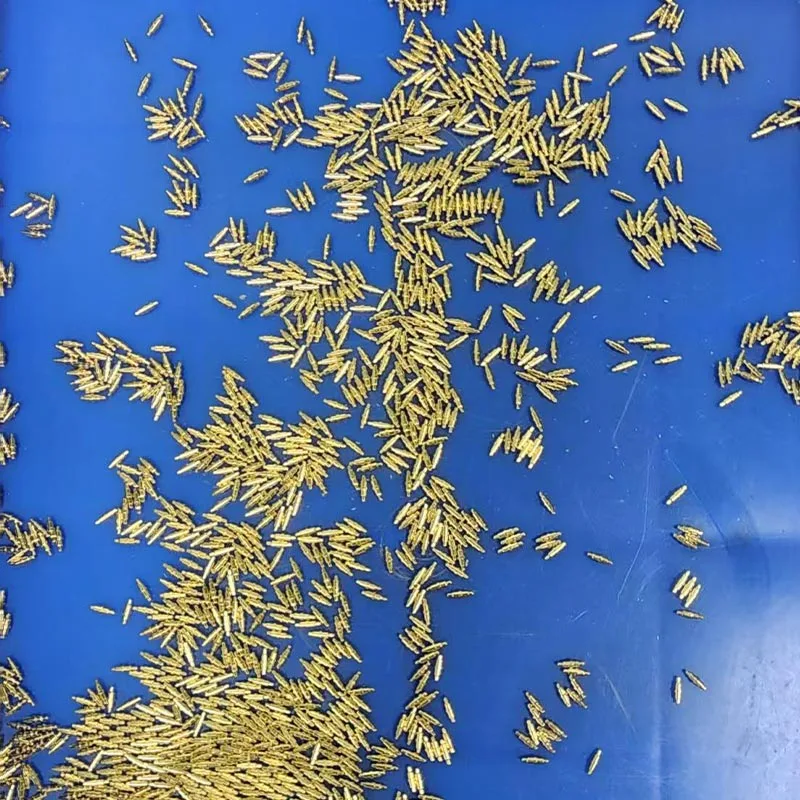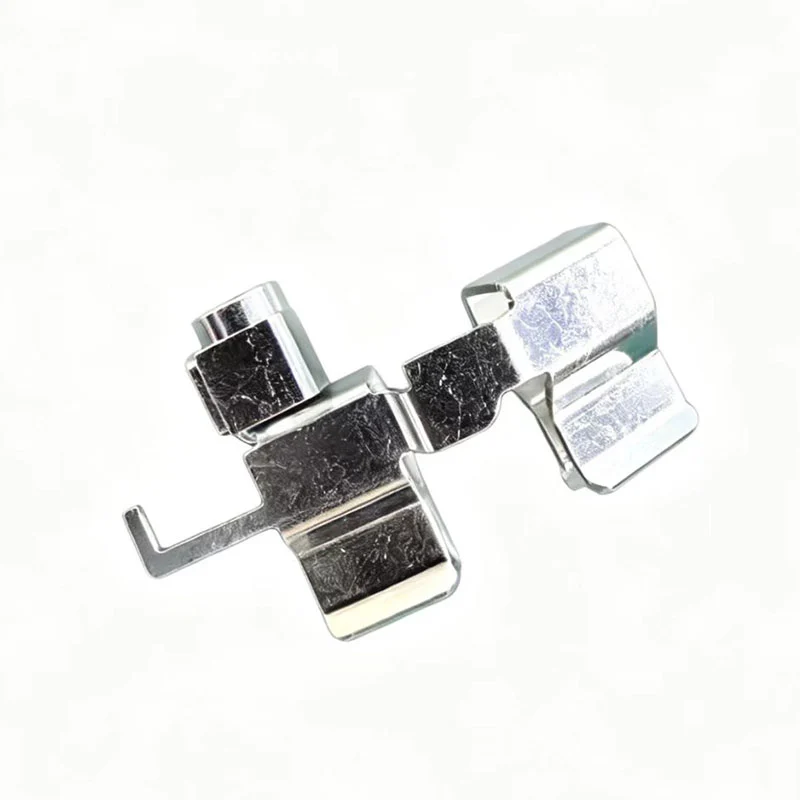

SMT Ground Pin Brass Locating Standoff Hardware plays an important role in modern PCB assembly by combining electrical grounding, mechanical positioning, shielding-can retention, and circuit isolation in one compact component. Qiyiguo supplies these precision components for automated SMT production, with standard and customized configurations designed for consumer electronics, automotive electronics, wireless communication, and industrial control applications.
Reliable grounding and precise mechanical positioning are essential when a PCB must work with a metal shielding cover. A properly selected grounding standoff can create a stable electrical path while helping prevent shielding cans or circuit boards from shifting during assembly and reflow. Qiyiguo's SMT grounding hardware is available in tin-plated brass, gold-plated brass, phosphor bronze, and stainless steel, with dimensional tolerances controlled within ±0.02 mm. Standard heights include 0.8, 1.0, 1.2, 1.5, 2.0, 2.5, and 3.0 mm, while customized structures can be developed from drawings or samples.
Table of Contents
Why Is Grounding Hardware Important in SMT PCB Assembly?
What Functions Does This Hardware Perform?
How Do Materials and Structures Affect Selection?
Key Specifications at a Glance
Where Is SMT Grounding Hardware Used?
What Manufacturing Features Matter for Mass Production?
How Should Engineers Select the Right Component?
How Can Buyers Prepare for Custom Procurement?
Why Is Grounding Hardware Important in SMT PCB Assembly?
Modern electronic devices increasingly combine high-speed signals, compact PCB layouts, metal shielding structures, and sensitive communication circuits. Under these conditions, grounding is not simply a matter of connecting a PCB to a chassis. The mechanical contact position, electrical continuity, component height, soldering behavior, and tolerance stack-up can all influence the final assembly.
SMT grounding pins provide a practical way to establish electrical contact between a PCB and a shielding structure. When multiple grounding points are correctly distributed around a shielding cavity, they can help create a more consistent equipotential environment and reduce unwanted electromagnetic leakage.
The mechanical function is equally important. A locating standoff can help position a shielding frame or related hardware during automated assembly, transportation, and thermal processing. This dual electrical-mechanical role makes precision grounding hardware particularly useful in compact electronics where every PCB area matters.
What Functions Does This Hardware Perform?
Multi-Point Grounding
Multiple grounding points can provide a shorter and more distributed electrical path between the PCB and shielding structure. Compared with relying on a single grounding point, a properly engineered multi-point configuration can help reduce unwanted impedance and improve shielding continuity.
PCB Positioning and Retention
The locating-post geometry provides mechanical reference points for PCB and shielding components. Stable positioning is particularly valuable during pick-and-place operations, reflow soldering, and subsequent product transportation.
Shielding-Can Retention
A flat-base structure can sit securely against the PCB pad while supporting the shielding can. This helps reduce movement, lifting, or displacement caused by thermal expansion and reflow processing.
High- and Low-Voltage Isolation
In suitable layouts, grounding posts can also function as physical separation features between different circuit areas. Engineers can use the available height and placement geometry to establish controlled spacing around sensitive or higher-voltage sections.
- Electrical grounding and equipotential connection
- PCB and shielding structure positioning
- Mechanical retention during assembly
- Physical separation between circuit zones
- Support for automated SMT manufacturing
How Do Materials and Structures Affect Selection?
Material selection should reflect the required electrical performance, mechanical strength, environmental conditions, plating requirements, and manufacturing process. Different projects may require different combinations rather than a single universal material.
| Material / Structure | Typical Advantage | Potential Application |
|---|---|---|
| Tin-Plated Brass | Good conductivity and practical production cost | General consumer electronics |
| Gold-Plated Brass | Stable contact performance and corrosion resistance | Communication and high-frequency assemblies |
| Phosphor Bronze | Good elasticity and mechanical resilience | Grounding and spring-contact applications |
| Stainless Steel | High structural strength | Mechanically demanding assemblies |
| Solid Grounding Post | High rigidity and positioning accuracy | Rigid PCB and shielding structures |
| Hollow Grounding Post | Reduced material consumption and weight | Space- and cost-sensitive designs |
| Spring-Loaded Grounding Pin | Compensates for assembly tolerances | Structures requiring flexible contact |
For assemblies exposed to repeated mechanical movement or housing deformation, a spring-loaded configuration can maintain electrical contact despite small dimensional changes. For rigid structures where accurate positioning is the priority, a solid locating post may be more appropriate.
Key Specifications at a Glance
Engineering teams can use the following specifications as an initial reference when evaluating grounding and locating components:
| Parameter | Available Specification |
|---|---|
| Standard Heights | 0.8, 1.0, 1.2, 1.5, 2.0, 2.5, 3.0 mm |
| Dimensional Tolerance | Within ±0.02 mm |
| Material Options | Tin-plated brass, gold-plated brass, phosphor bronze, stainless steel |
| Structural Types | Solid, hollow, spring-loaded |
| SMT Process Compatibility | Suitable flat-base designs for automated SMT assembly |
| Reflow Resistance | Standard flat-base models tested up to 260°C |
| Packaging | Tape-and-reel for automated SMT loading |
| Customization | Non-standard dimensions and structures available |
These specifications should be treated as a starting point. Final dimensions, plating, contact geometry, and mounting method should be verified against the PCB drawing, shielding structure, soldering profile, and environmental requirements of the finished product.
Where Is SMT Grounding Hardware Used?
Grounding and locating components are especially valuable in products that combine compact electronic circuits with conductive shielding structures. Typical applications include:
- Consumer electronics and portable devices
- Wireless communication modules
- Automotive electronic control units
- Industrial control motherboards
- New-energy equipment control boards
- RF modules and communication equipment
- IoT terminals and compact electronic assemblies
- PCB assemblies using metal EMI shielding covers
During hardware development, engineers often need to address EMI and EMC performance while maintaining strict mechanical constraints. Grounding pins, shielding cans, conductive springs, and related metal hardware can therefore be considered as part of the same overall shielding architecture.
What Manufacturing Features Matter for Mass Production?
For high-volume SMT assembly, component consistency is just as important as nominal design performance. Small variations in height, base flatness, plating, or geometry can create placement and soldering problems when thousands or millions of components are assembled.
Precision Turning and Stamping
Combining precision turning with high-speed stamping allows small metal components to be produced with repeatable geometry. Qiyiguo states that dimensional tolerances can be controlled within ±0.02 mm for its grounding hardware.
Flat-Base Stability
A stable base helps the component remain correctly positioned during automated pick-and-place operations. This becomes especially important during reflow, where the assembly reaches elevated temperatures.
Tape-and-Reel Packaging
Tape-and-reel packaging enables grounding components to be loaded directly into automated SMT equipment. This can reduce manual feeding operations and support continuous production workflows.
Consistent Surface Treatment
Plating influences electrical contact behavior, corrosion resistance, solderability, and service life. Therefore, plating quality should be included in incoming inspection and supplier qualification procedures.
How Should Engineers Select the Right Component?
Choosing a grounding or locating component should begin with the complete assembly rather than the component alone. The following checklist can help engineering teams define requirements:
- Determine the required height: Measure the PCB-to-shielding distance and account for the complete tolerance stack.
- Define the grounding path: Identify where electrical contact must be established and whether multiple grounding points are required.
- Select the material: Consider conductivity, strength, elasticity, corrosion resistance, and cost.
- Check the assembly process: Confirm compatibility with pick-and-place, solder paste, reflow temperature, and inspection procedures.
- Evaluate structural movement: Use spring-loaded designs when the final housing or shielding structure may introduce dimensional variation.
- Confirm packaging: For automated production, verify that tape-and-reel delivery matches the feeder requirements.
- Validate EMC performance: Test the complete shielding system rather than evaluating the grounding component in isolation.
For customized projects, providing a PCB drawing, shielding-can drawing, target height, material preference, plating requirement, and annual demand forecast can significantly simplify engineering evaluation.
How Can Buyers Prepare for Custom Procurement?
Procurement teams purchasing precision grounding hardware should evaluate both technical compatibility and supply capability. A reliable sourcing process should cover prototypes, dimensional validation, production consistency, packaging, and long-term availability.
Qiyiguo supports small-batch trial orders for prototype debugging and preliminary EMC testing, followed by long-term high-volume supply after the product design is finalized. Custom structural development can be evaluated from customer drawings or physical samples.
For buyers comparing suppliers, it is useful to request:
- Material and plating specifications
- Dimensional tolerances and inspection criteria
- Reflow temperature compatibility
- Packaging and labeling requirements
- Prototype and sample availability
- Custom tooling or structural-development options
- Production capacity for repeat orders
Related components such as EMI conductive springs, shielding covers, grounding clips, and other precision metal parts can also be evaluated together when the project requires a complete EMI shielding solution.
Frequently Asked Questions
What is an SMT grounding pin used for?
An SMT grounding pin provides an electrical connection between a PCB and a conductive shielding structure while potentially serving mechanical positioning or retention functions. It is commonly used in PCB assemblies requiring controlled grounding and EMI shielding.
Can brass grounding pins withstand reflow soldering?
Suitable flat-base models can be designed for reflow processes. Qiyiguo states that its standard flat-base models have been tested at temperatures up to 260°C. The actual suitability should be confirmed against the customer's complete soldering profile and assembly materials.
What standard heights are available?
Standard heights include 0.8 mm, 1.0 mm, 1.2 mm, 1.5 mm, 2.0 mm, 2.5 mm, and 3.0 mm. Non-standard heights can be developed for PCB and shielding structures with special dimensional requirements.
Should I choose a solid, hollow, or spring-loaded grounding pin?
Solid pins are suitable when rigidity and positioning accuracy are important. Hollow versions can reduce material usage and weight, while spring-loaded pins provide elastic compensation for assembly tolerances and structural movement.
Can these components be customized?
Yes. Customization can cover dimensions, structural geometry, materials, plating, and other application-specific requirements. Drawings or samples can be used as references during engineering evaluation.
Are the components suitable for automated SMT production?
Standard components can be supplied in tape-and-reel packaging for automated SMT lines. Engineers should confirm component dimensions, feeder compatibility, placement orientation, and reflow conditions before production release.
Conclusion
Effective PCB grounding requires more than simply adding a conductive connection. The right combination of material, geometry, dimensional accuracy, mechanical stability, plating, and assembly compatibility can help create a more reliable shielding structure and a more consistent production process. For engineers and procurement teams developing compact electronic products, Qiyiguo provides standard and customized grounding, locating, and precision metal hardware options for prototype development and volume production. If you are evaluating a new PCB shielding design or need customized SMT grounding components, contact us with your drawings, specifications, or samples to discuss the appropriate structure, material, dimensions, and supply solution.